

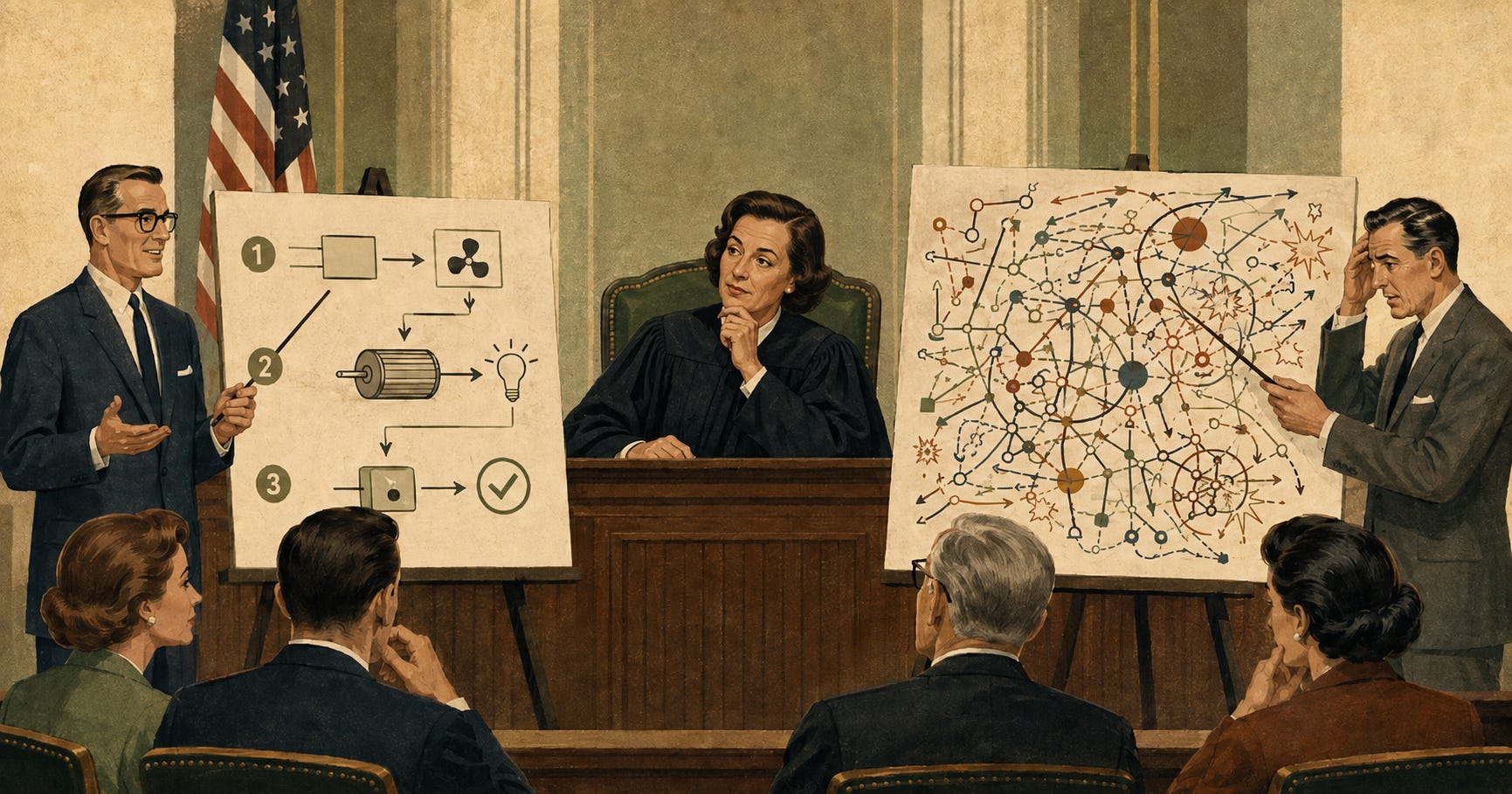
In a federal lawsuit, it’s up to the trial court judge to decide whether an expert witness is qualified to testify to the jury. The judge is supposed to apply what’s come to be known as the “Daubert standard,” named for the 1993 Supreme Court case that directed that the trial court judge must make sure that any expert testimony rests “on a reliable foundation”.
So, how, in practice, do judges apply the ‘Daubert’ standard to different types of expert witnesses? Do judges treat all disciplines the same or are they “harder on” some categories of experts than others? For example, all things being equal, is a court more likely to let a medical doctor testify, or an economist? A statistician vs. an engineer?
To find out, we looked at 550 federal rulings pulled from RECAP, covering 935 individual expert challenges. For each discipline, we asked:
how often does a court exclude the expert entirely, (”you can’t testify at all”)
how often does the court allow the expert to testify but limit the topics they can testify to (”you can testify to how the valve works but NOT about whether it caused the accident”)
how often does the court allow the expert free rein to testify
Results are still preliminary, but here is how things look so far.
Big differences in how the Daubert standard gets applied, and how often an expert is excluded, based on the type of expert and the topic (more on that below)
The experts who “fare best” (i.e., are least likely to get excluded) are those who can “show their work” and who stick as closely as possible to what they observed or calculated -- as opposed to those offering more speculative opinions about causation
The professional title of the expert doesn’t seem to matter as much as the topic and method. Example: an “engineer” testifying on how a device works in a patent case is going to fare better than an engineer opining on what caused a complex accident. Both engineers, but very different results.
Maybe the judges aren’t deciding which experts to trust. Maybe they are deciding which kinds of reasoning they trust. We suggest that it doesn’t really help to talk about “type of expert” and instead we should be talking about “type of expert testimony.”
Here are the 10 most common types of expert testimony in our sample, starting with the testimony courts are most likely to allow.
Economist (antitrust case): at least in our sample, NEVER excluded under Daubert. Consistently “show their work”, i.e. follow a fairly standard, number-driven method. In our sample, 32% of the time (7 out of 32) the court did trim the opinion, e.g., limit testimony on one topic but allow the expert to testify about the others.
Statistician (analyzing data): this category consists of statisticians who analyze data collected by others (in contrast to a statistician who conducts a survey, for example), excluded rarely (only 1 out of 13 in our sample). Courts do sometimes bar testimony on certain topics, e.g., the court allows the expert to comment on the data analyzed, but not extrapolate beyond it.
Engineer (patent case): rarely excluded. Courts tend to trust them because they can follow a standard procedure for “claim construction”. Courts will, about a third of the time, prevent them from testifying to, for example, whether one design “infringes” another, since that is a question for the jury.
Asset valuation: this is a fairly broad category, but generally courts trust experts who follow a standard methodology, e.g., using comparables for a real estate appraisal.
Statistician (survey): this category is for experts who collect data, e.g., by conducting a survey, rather than just analyzing data. Courts are more skeptical here, regarding survey design and methods. These experts get excluded wholly or in part about 40% of the time.
Medical Doctor (personal injury): when doctors testify about personal injury, courts either wholly or partially exclude their testimony about half the time. A little hard to know what’s going on here. It looks like, unlike, say, patent claim construction, medical diagnosis is not as easy to “audit” or step through.
Engineer (accident reconstruction): in contrast to their colleagues who testify in patent cases, engineers doing accident reconstruction (i.e., expert testimony on what caused the machine to blow up) get wholly excluded about 30% of the time and at least partially excluded a further 20% of the time. Based on the cases we reviewed it looks like courts feel more skeptical of a “reconstruction” of what went wrong than they are of an explanation (as in a patent case) of how a system works.
Patent damages: Courts rarely exclude experts testifying to damages in a patent case -- but there are multiple legally required steps for calculating damages for patent cases and so courts often exclude part of an analysis (8 out of the 17 times in our sample).
Medical Doctor (medical device): Courts are skeptical of experts testifying about whether a medical device causes injury, and exclude expert testimony on this, completely or partially, about 60% of the time.
Medical Doctor (toxicology): As with medical devices, courts are skeptical of experts testifying as to causation of injury from exposure to allegedly toxic substances. Courts exclude this type of testimony, in whole or in part, about 60% of the time.
We ran this same breakdown — discipline, topic, exclusion rate — across 935 expert challenges. If you’ve got a Daubert fight coming up, on either side, drop a comment, or email me at adam@lawsnap.com what kind of expert and what kind of case. I’ll tell you what the pattern says before you’re standing in front of the judge.