
Judges Have Been Publishing Litigation Data for Years. Now We’re Finally Mining It.
The rulings were always public. What changed is that now we can use AI to read and analyze them at scale.

Eight years ago, I was googling something case-related and stumbled onto a page of tentative rulings posted by the Contra Costa Superior Court.
If you don’t practice in California: before a hearing, many courts post the judge’s tentative written ruling on the motion.
Motion to compel. Demurrer. Motion to strike. Summary judgment. You name it.
I started reading them and couldn’t stop.
This wasn’t a practice guide. It was better.
It was the judge, stepping through the issues, explaining exactly why this motion wins and that one loses. Which cases the court actually follows. Which mistakes are fatal. Which arguments sound good in a brief but do not survive contact with the court.
The court was showing its work.
And the strange thing is: none of this was hidden.
The problem was practical, not legal. No lawyer could realistically sit down and read thousands of tentative rulings across dozens of county court websites, then organize them by motion type, claim, issue, ruling, and recurring mistake.
That was the locked door.
LLMs changed the lock.
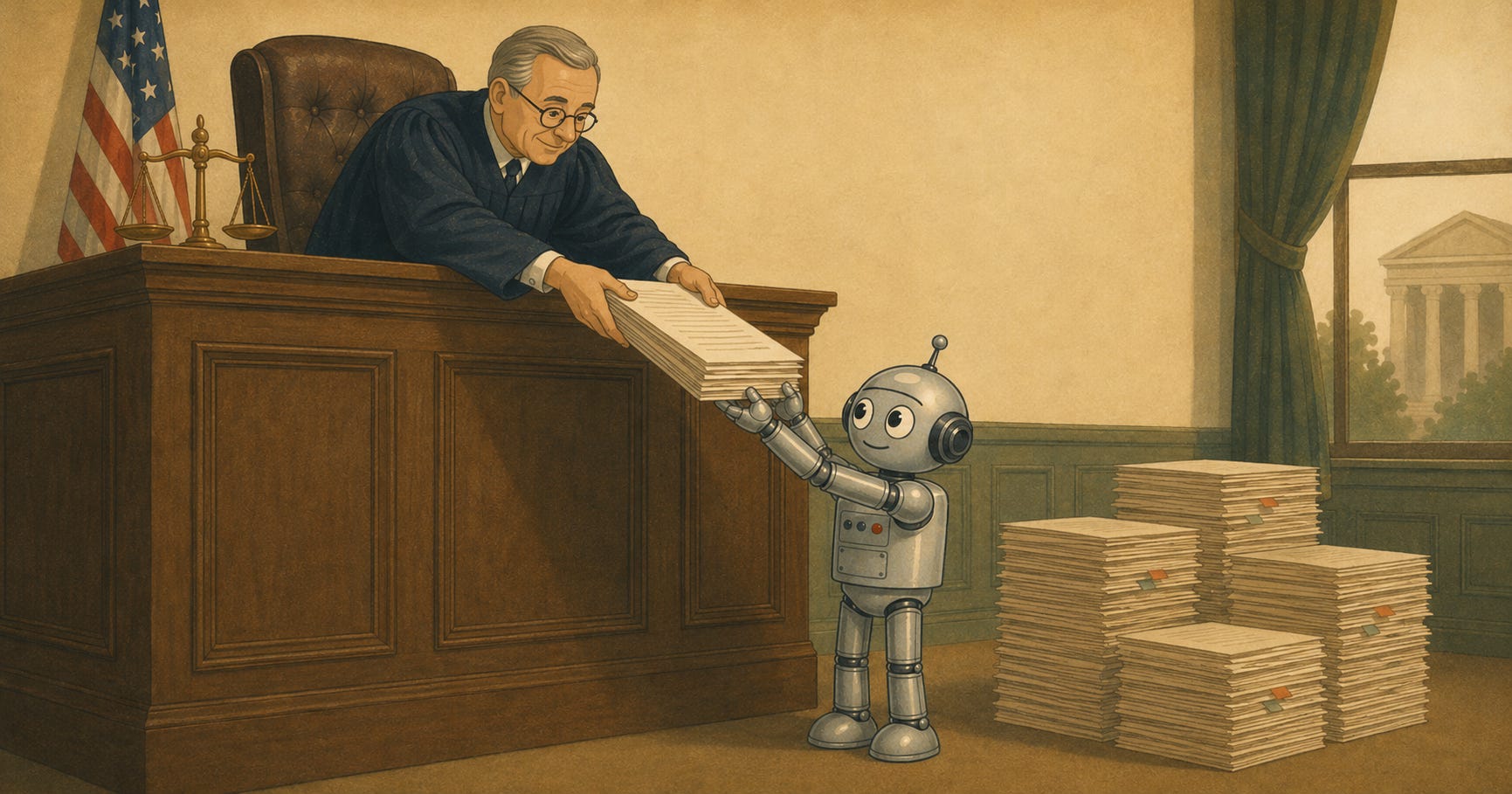
What changed
Two things, both recent.
First, better tools made it possible to gather the rulings. Every California county runs its own website, with its own format for posting tentatives. Finding and collecting them is a different puzzle in every county. That part is not glamorous. But it matters.
Second, LLMs can now do something that used to be completely infeasible: take hundreds of rulings and help categorize them.
What is this case about?
What motion was at issue?
What arguments did the court accept?
What arguments did the court reject?
What pleading defects mattered?
What evidence moved the needle?
What mistakes kept showing up?
And before anyone yells “hallucinations” — yes. That is the risk.
Which is why the I, the lawyer, stay in the loop.
I read the underlying rulings myself. I built a second system that checks the citations and the summaries against the source documents. The point is not to let AI replace legal judgment. The point is to let a lawyer see what was previously buried under too much volume.
The test
One question remained: would there actually be patterns? Or is every case a snowflake — too fact-specific to generalize?
To find out, I ran a pilot: elder abuse claims against nursing facilities.
Not because I’m an elder abuse specialist. I’m not. I chose elder abuse because it was the Goldilocks zone: enough cases to see patterns, not so many that the pilot would get swamped.
We pulled tentative rulings from seven of California’s busiest counties — including Los Angeles, Santa Clara, Orange, Contra Costa, San Bernardino, Riverside, and San Mateo — covering the last few months.
Fifty separate cases.
Then we went deep.
When demurrers got granted and when they got denied — then worked backwards to what the complaint needed to plead, and backwards again to what the initial investigation needed to establish.
When motions to strike punitive damages survived — and when they did not.
When plaintiffs got the discovery they needed — and what made the difference.
When defendants won summary judgment — and when they lost.
And when defendants lost, we looked at why: the evidence, the separate statement, the disputed facts, the missing records, the expert issues, the objections, the procedural mistakes.
I did not expect the patterns to be obvious, but the same arguments winning. The same arguments losing. The same mistakes, again and again.
Including defense firms losing summary judgment because they botched their separate statement of undisputed material facts. In some rulings, the court called them out by name for it.
That was the moment the project clicked for me.
These tentative rulings were not just isolated orders.
In the aggregate, they were litigation data.
What we released
Last week, we released four free elder abuse litigation guides based on that pilot.
They cover the stages where these cases are often won or lost:
The guides are not built from vibes. They are built from actual trial-court rulings — the day-to-day decisions that usually never become appellate opinions, never make it into a practice guide, and never get systematically analyzed.
That is what makes this different.
Appellate cases tell you the doctrine.
Tentative rulings show you how trial judges are applying that doctrine to real motions, real records, and real lawyer mistakes.
Both matter.
But only one of them has been sitting in plain sight, mostly unused, because the scale problem was too hard.
The part that matters for you
A few readers wrote back after the elder abuse guides and said some version of:
“Great — but I don’t do elder abuse.”
Exactly.
Elder abuse was the pilot, not the point.
The point is that courts have been publishing usable litigation intelligence for years. It just was not usable at scale.
Tentative rulings show what judges actually do with pleadings, discovery fights, evidentiary objections, summary judgment records, separate statements — the whole day-to-day life of a case.
That is the gold mine.
For elder abuse, the pattern held at every stage: what got complaints past demurrer, what discovery mattered later, what helped plaintiffs survive summary judgment, and what mistakes kept costing parties their motions.
Now we are seeing the same thing in other areas — pleading fraud in California, for starters.
The practice area changes.
The method does not.
Find the rulings. Organize them. Read them at scale. Check the work. Then turn what repeats into something a lawyer can actually use.
That is what we are building.